
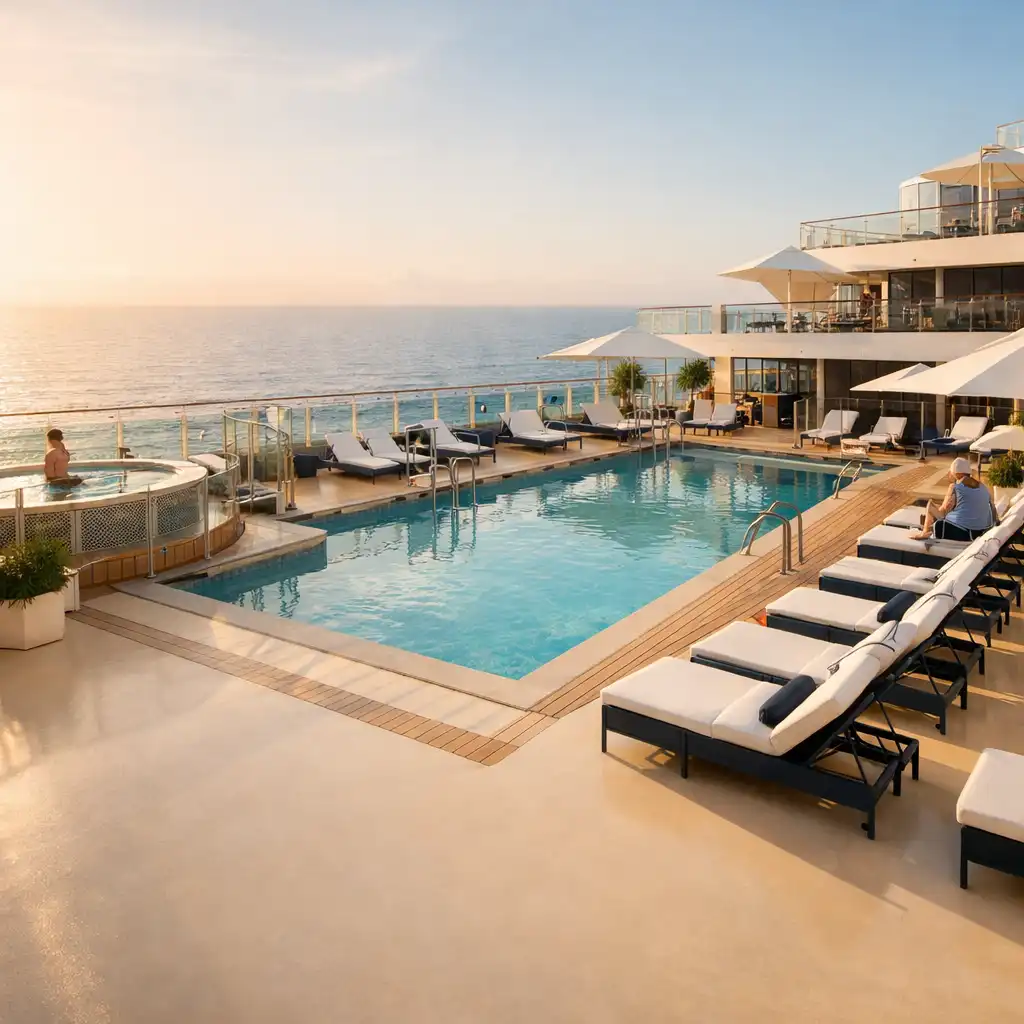
Sunlit cruise-ship pool deck with calm water and an ocean horizon

Life on board · wellness, family and evening

Wellness, Family Areas and Nightlife

Cruise ships change character from morning to evening. This ADSIGHT LTD guide helps you read life on board through rest, shared time and after-dark atmosphere, then decide which spaces deserve closer attention for your own day at sea.

Wellness at sea

A calmer way to read the ship

Wellbeing begins with rhythm, not with a fixed list of facilities. Between meals, ports and shared activities, a quiet observation point, fresh air or an unhurried stretch of time can be as useful as a more active routine. When researching cruise life on board, look for the places that make it easier to reset without leaving the atmosphere of the ship behind.

01 · Move

Choose movement with context

Fitness areas, walking routes, pools and open decks are useful subjects to investigate on a chosen ship, but their setting matters as much as their name. Notice where they sit, how exposed they are to weather, and whether they are likely to feel busier at particular points in the day. A movement routine feels more natural when the route to it suits your cabin location and your preferred pace.
02 · Pause

Keep room for quiet

Observation areas, shaded seating and calmer lounges can offer a different kind of recovery: a book, a sea view or simply a slower conversation. Treat these as examples to look for rather than guarantees. Photographs, deck information and descriptions of public spaces can reveal whether a setting has depth, natural light and a little distance from the day’s most energetic routes.

03 · Plan

Match access to your day

Before making a wellness area central to your plans, compare its ambience, access and relationship to the rest of the ship. Think about whether you prefer a lively route through public life or a quieter return to your room between activities. Cabin placement can change that experience considerably, so it helps to pair this reading with the wider ship picture. Explore cabins and suites

Family time at sea

Shared time does not have to mean one plan

Family life on board often works best when togetherness can sit alongside a little independence. A shared morning may lead into separate interests, then meet again around a view, a meal or an easy public space. As you explore family areas and passenger experiences, focus on how a ship supports changes in energy rather than assuming everyone will want the same activity at the same moment.

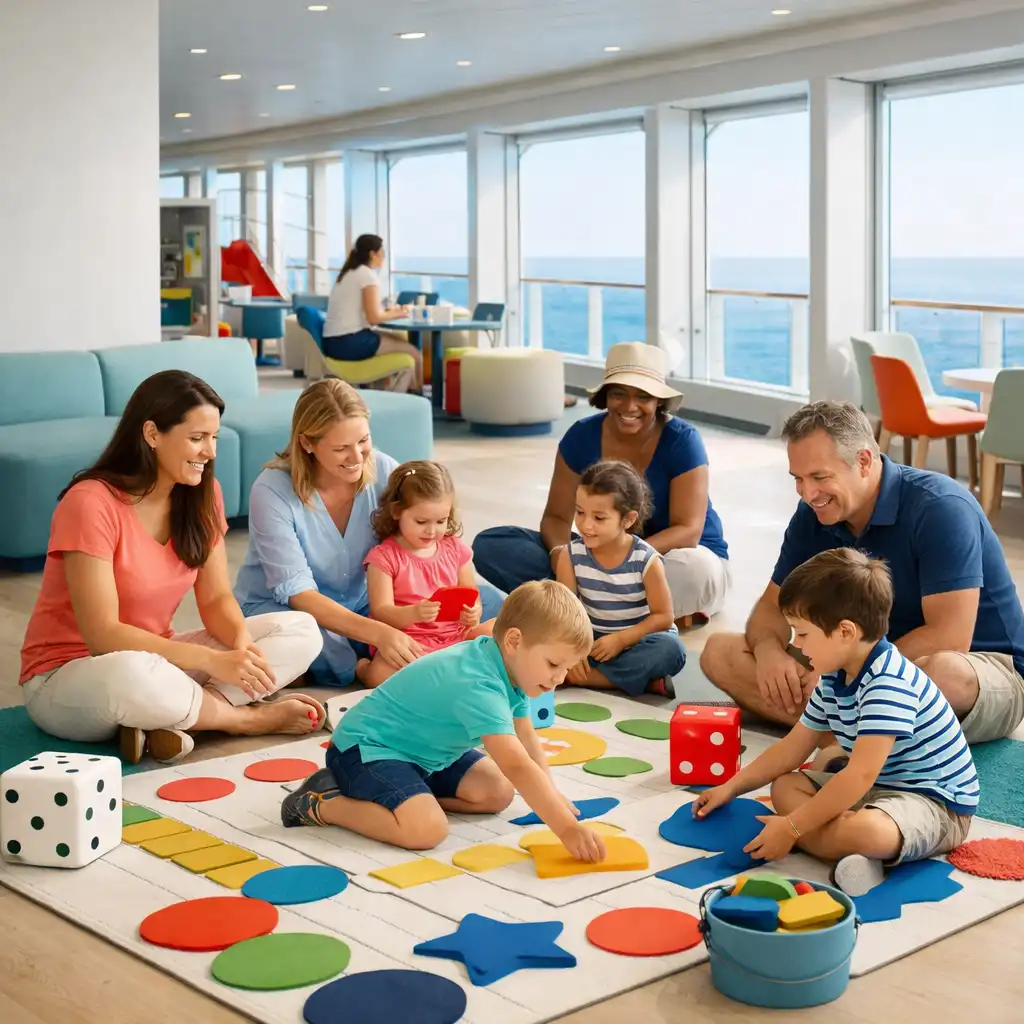
Families sharing a bright daytime activity area aboard a cruise ship
Family spaces are easiest to assess as connected shared environments, not as isolated activities.

Read the space

Look for easy transitions

When reviewing public areas, ask what makes a change of plan feel simple. Sightlines can help people stay oriented; places to sit can make a pause feel welcome; nearby food, washroom access, shade and open floor space may all affect the flow of an active day. These are observation prompts, not promises about a particular ship. The useful question is whether the setting appears to give different travellers room to participate at their own pace.

Read the route

Let the deck plan do some work

Deck geography shapes how much movement a family day involves. Look at the relationship between livelier areas, quieter corners and the route back to the cabin, without assuming exact layouts from one ship to another. A clear sense of distance helps you judge where an impromptu rest might fit and how easily different preferences can reconnect. Explore cruise ship categories

Evenings on board

After dark, choose the atmosphere

Evening life can extend the ship’s character in many directions: sociable, cultural, low-key or later-paced. Rather than treating nightlife as one loud scene, consider how the spaces available might suit the close of your day. A conversation by the windows, a structured performance or a more energetic gathering can each offer a distinct way to remain part of life on board.

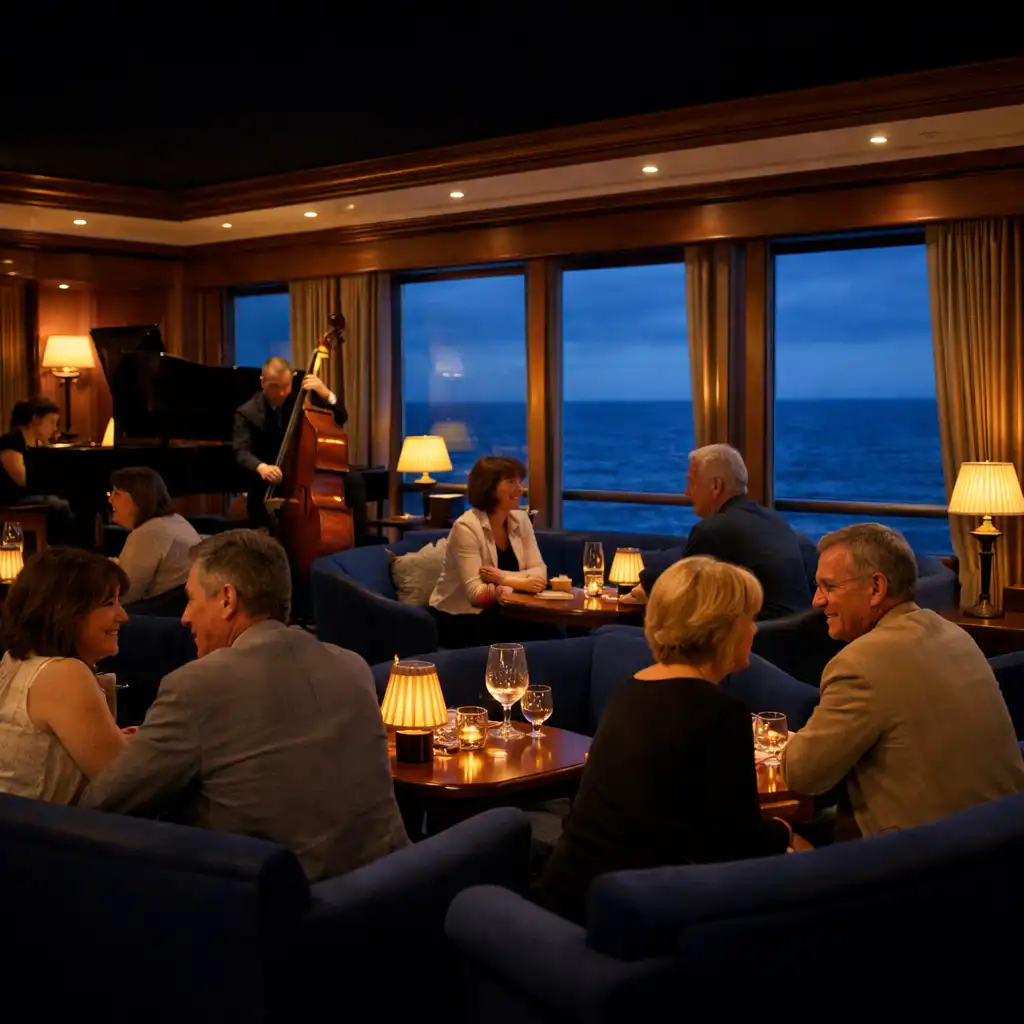
Warmly lit cruise-ship lounge with ocean-facing windows in the evening
An evening lounge can be a setting for sea views, conversation or a gentle transition into the night.

Lounge

Let the setting set the tone

Lounges can be worth researching for their seating style, music level, sightlines and location within the ship. Some travellers may be looking for a calm end to an active day, while others may prefer a livelier social backdrop. Descriptions and images can help you identify whether a space feels oriented toward conversation, sea views or a performance-led moment.

Showtime

Consider a structured evening

Entertainment venues may offer a more defined evening rhythm. When reading about them, consider the timing, seating arrangement and kind of programme you enjoy, rather than assuming a single format. Looking beyond nightlife can give the whole evening picture more context. Read the onboard entertainment guide

Late

Keep energy personal

Later social spaces can appeal to passengers looking for movement, conversation or a livelier close to the day, yet the atmosphere varies from ship to ship. Read venue descriptions with your own preferred energy level in mind, and note how far an evening setting sits from sleeping areas. The goal is choice: an ending to the day that feels like yours.

Planning lens

Find your pace aboard

A useful cruise plan does not need to fit every possible activity into one day. Start with the rhythm that feels most natural to you, then use it as a way to research rooms, routes, public spaces and evening settings across the ship.

Restorative path

Slow and spacious

If open air, quiet spaces and time to reset matter most, begin with the room and the routes around it. Research cabin location, any outdoor setting that interests you and the character of quieter public areas. These details can help you imagine the pauses between ports, meals and shared plans without assuming that every ship arranges them in the same way.

Use broader category information to connect private retreat with the public spaces you may want nearby. Explore cabins and suites or browse cruise ship categories.

Research checklist

Questions worth carrying into your research

Details vary by ship and itinerary, which makes good questions more useful than broad assumptions. Carry these prompts into deeper category guides to compare how wellness, family time and evening preferences may fit the kind of cruise day you want.

For a restorative day

  1. Where do calmer spaces sit? Notice whether quiet public settings appear close to the routes you expect to use.
  2. How do outdoor areas read across the day? Look for shade, exposure and the kind of atmosphere images suggest.
  3. Does cabin location support your pace? A room can shape how easily you return for a pause between plans.
Explore cabins and suites

For time together

  1. How easy is movement between spaces? Consider the routes between active areas, meals, calm corners and the cabin.
  2. Is there a mix of environments to investigate? Variety can make it easier for different people to find their own rhythm.
  3. Where could a pause fit? Look for seating, open circulation and places that seem comfortable for regrouping.

For an evening out

  1. What range of venue moods is described? Compare calm conversation settings with more structured or lively possibilities.
  2. How does the evening route meet sleeping areas? Distance and position may matter when you are weighing your preferred close to the day.
  3. Which energy level feels right? Use programme and venue descriptions to identify the atmosphere you would enjoy.
Read the onboard entertainment guide

Next editorial step

Keep building the picture

The best onboard rhythm often comes from connecting private retreat, shared spaces and evening preferences before a cruise. Continue through the categories that matter most to you, and use each guide to build a clearer sense of daily life on board.